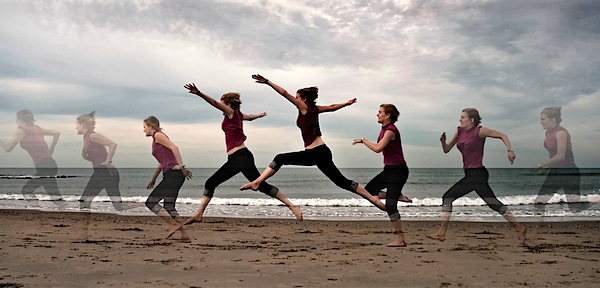
Movement provides interesting elements to an otherwise dull photograph. However, it is never easy to capture motion in a still picture. This skill can come in handy in various categories of photography such as shooting sporting events and wildlife. Below are a few tips to be able to capture moving subjects:
Importance of shutter speed
For still subjects, the shutter speed may not matter as much as the aperture and the exposure, however, it is very crucial in capturing motion. There is no right shutter speed for every situation. It will depend on a couple of factors such as your subject's speed and your distance to your subject. The faster the shutter speed, the sharper your image will be. Experimenting with different speeds can give you varying results.
Usage of panning
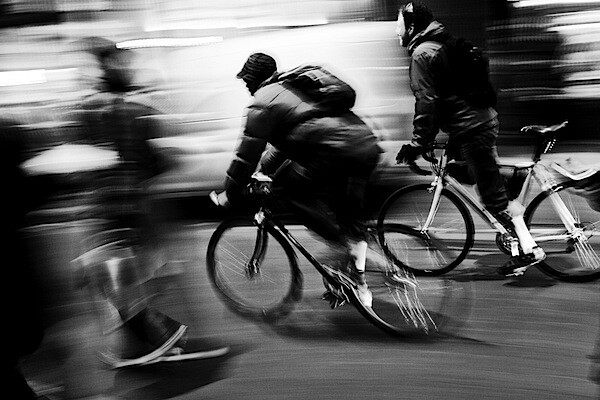
Panning is described as a horizontal movement and helps keep your subject inside your frame. This technique creates the illusion of motion by blurring the background while keeping your subject sharp.
Take lots of shots
Don't limit yourself to taking only one shot. Faster shutter speeds will allow you to take continuous shots with minimal delay. This can insure you get at least one photo that suits your tastes.
Practice
Everyone, even professionals, started from the bottom, and nobody is an expert at first. With the right attitude and constant practice, you can master motion photography as well.
Joshua Eaves is a professional photographer from Kentucky. Subscribe to his blog for more detailed photography techniques.
Friday, July 17, 2015
Friday, April 10, 2015
Capturing the beauty in the world: Travel photography tips
![]() |
| Image Source: statravel.co.uk |
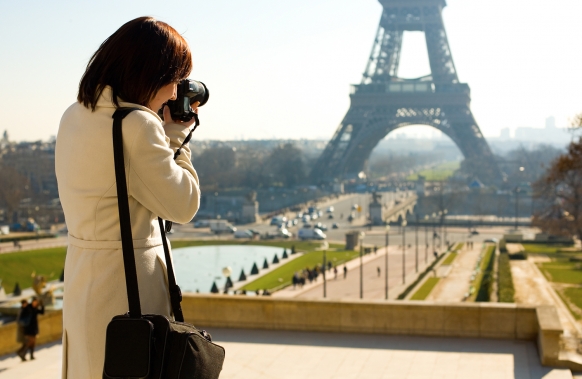
People travel so that they can explore the world and see its beauty and splendor. One of the best ways to remember adventures is by taking pictures. Now, we all want to move beyond vacation shots and take stunning shots of the world around us. Here are some tips to get you started:
Do your research
If you're travelling to take pictures, then you should know the best sites or landmarks to photograph. Travelling off-season is your best bet to avoid large crowds and find better photo opportunities. You should also research on unique sights or destinations off the beaten path.
Choose the subject
When you're taking a picture of something, you have to choose your subject carefully. If you don't know what to focus on, your photo will look cluttered. If you have to explain what your picture is about, then it is not effective.
![]() |
| Image Source: gapyear.com |
Experiment with angles and composition
The first interesting angle you see is not the last. Don't limit yourself to one angle and experiment with different vantage points and composition. Sometimes simple orientation can dramatically change the whole look of a photo and create a more dynamic shot.
Watch the time
Because lighting is a very important factor in taking great photos, you should consider the time of day you're taking pictures. The perfect time for photographers is sunrise or sunset; these are times in the day you can get the perfect light for your shots. Timing is key for capturing stunning photographs.
![]() |
| Image Source: ephotozine.com |
Hi, I'm Joshua Eaves, a photographer from Kentucky. If you liked my blog, you can also find me on Facebook for more photography tips and techniques.
Monday, March 9, 2015
REPOST: Photography tips: shots that bend space
Chris Edwards reveals how you can play around with perceptions by adjusting the distance, light and size of objects with special-effects lenses.
![]() |
| High and wide: manipulate shots with a wide-angle lens – ideal for photographing sports such as skateboarding | Image Source: telegraph.co.uk |
Photography is as much about subverting the way we look at the world as capturing it. Nothing helps with that subversion more than choosing lenses that let the photographer bend space from behind the viewfinder.
Because they capture and focus light from a much larger area than the human eye can perceive directly – our normal field of view is more or less that of a 50mm lens on a full-frame camera – wide-angle lenses have become one of the photographers’ main tools for reshaping space. They bring objects into the frame that our eyes cannot see without looking to one side or another, and change the way we view the scene.
Glen Friedman’s first choice when shooting skateboarders has often been the wide-angle lens. It’s a kind of lens that demands that the photographer gets close to the action, but it’s a technique that pays off by capturing the energy of the sport. With the board close to the lens, it appears much bigger than even the rest of the skater’s body and the surrounding landscape, giving the shot an epic quality.
A similar approach often yields quirky, amusing and sometimes more intimate portraits than the longer focal-length lenses that teachers normally recommend. Because the lens accentuates closer objects, the shots can seem more like caricatures than portraits. But they are effective for turning what would be a generic pose into something special if the shot is taken looking down at the subject, possibly with their hands outstretched towards the camera to make them seem much larger.
"A number of Nikon cameras can recreate the miniature effect electronically."
Telephoto lenses on the other hand compress distance, making objects that are quite spread out seem to almost be on top of each other. Thanks to this effect, they can bring street scenes to life by emphasising the close-packed hustle of the city. Or they can make wildlife at a distance seem a bigger part of the landscape.
A major trend in the past few years has been to exploit special-effects lenses much more. One example is the tilt-shift or perspective-control lens. These slide the lens element in different directions to steer the light in unusual ways.
Originally created to let photographers take pictures looking up at tall buildings from ground level without their walls appearing to bend inwards, the tilts and shifts can be exploited to create a range of special effects. One used a lot by a number of photographers is the “miniature” effect, recreating the shallow depth of focus of a macro lens but on a landscape scale. The narrow band of sharpness can make even the biggest house look like a model if shot from a distance and above.
You can subvert the miniature idea in novel ways. The Skrekkøgle art group even went to the extent of making a giant fake €1 coin that it placed on the bonnet of a sports car, a telephone box and next to a shopping trolley to reinforce the “model village” illusion of scale made possible by tilt-shift manipulation.
Although you need a true tilt-shift lens for the full range of possibilities, a number of Nikon cameras have a mode that recreates the miniature effect electronically, giving you another way to bend space for that unusual shot.
Hello! I am Joshua Eaves, a photographer by trade. Like my Facebook page for more helpful techniques and guidelines in photography.
Sunday, February 22, 2015
Tricks to taking awesome sports shots
![]() |
| Image Source: news.com.au |
Sports photography is one of the most difficult types of photography to master. The subjects are almost always in motion, and it’s tough to get the shot right. A small error can totally ruin what would have been a great photo.
Still, it’s difficult to deny the appeal of having athletes as subjects in photos. Sporting events are inherently loaded with action and drama so there are a lot of chances to capture a great photo that is loaded with intensity and passion. There’s beauty in fleeting moments, and the best sports photos are those that have captured the skills and abilities of athletes in action and those that highlight emotional moments of victory or defeat.
Taking those kinds of shots requires a lot of preparation and practice. First, those who want to get into sports photography also have to invest in a good SLR camera and a lens with at least 200mm of reach.
![]() |
| Image Source: scm.ulster.ac.uk |
Second, having some interest in the sport is also important. It can be difficult to take awesome pictures if the photographer doesn’t know what types of action to expect from the game. This interest and knowledge of the sport will also inform photographers where they need to position themselves in order to get the type of shot that they want.
Third, familiarization with the camera settings is important. Sporting events happen under various conditions and knowing which is best to use under given situations makes all the difference. Notably, making use of auto-focus effectively will yield dramatic results as the lens will always be adjusting to keep moving objects sharp.
Finally, daring to try something different is also important. In the beginning, it is okay to try and imitate great shots from magazines. If one wants to improve, however, one must also attempt to look for new ways to approach the subject. In doing so, a photographer can explore possibilities and come up with new angles, new backgrounds, and new shooting locations that will yield unique and fantastic photos.
![]() |
| Image Source: funofart.com |
For more articles on photography tips and tricks, follow me, Joshua Eaves, on Google+.
Thursday, January 15, 2015
Learning the art of smartphone photography
![]() |
| Image Source: androidauthority.com |
Admittedly, many of us cannot live without our smartphones. They have replaced so many of the other tools we used before because of the almost limitless capabilities of such devices. Smartphones now have high-definition cameras that may not be as good as DSLRs but can be used by people who want to take pictures but don't want to lug around bulky cameras with extra lenses and other accessories.
Yes, there are ways to use a smartphone to capture great photos. Here are some tips on how it's done:
Crop, don't zoom
Unlike on a DSLR, the zoom feature on your phone will most likely cause the quality of your photo to diminish. Instead of zooming in on an object, just get as close as you possibly can to it (but don't forget to harness your phone's HDR) and take the shot. Use the crop feature to get the framing you wanted in your picture to maintain the photo quality.
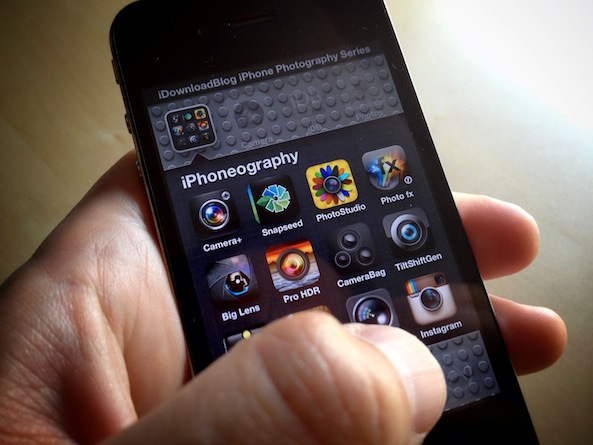
Download third-party apps
Your phone's built-in camera will obviously have its limits but don't let that stop you from producing amazing shots. There are many third-party camera applications you can use to take better photos. These applications may give you additional functions like Night Cam, Pro HDR, etc.
![]() |
| Image Source: idownloadblog.com |
Turn off the flash
A smartphone's flash is basically a LED light that lasts too long to produce a flattering picture. It can cause red eyes and can give your skin, or the person you're shooting, yellowish tone, emphasize eye bags, and generally take unflattering photos.
Edit
You can choose to edit the pictures in a professional editing program like Adobe Lightroom or download photo-editing applications on the Apple App Store or Google Play Store. A reminder though: don't overdo editing and try to avoid using filters.
Remember the rules of photography
Basically, you should not forget the rules in photography like composition because they still apply regardless of the equipment you use.
![]() |
| Image Source: samsungupdate.com |
Hey there! Joshua Eaves here, a photographer from Kentucky. If you enjoy reading my blog, follow me on Google+ for more discussions on photography techniques and other tips.
Subscribe to:
Posts (Atom)